Sani Sakakini talks first-time experiences as a pro, at FIBA Asia Cup, and home game in Palestine
RAMALLAH (Palestine) - Sani Sakakini is a player who has experienced many "first-time" experiences, which was his main topic of discussion in a talk with FIBA Asia Cup live on Instagram.
RAMALLAH (Palestine) - Sani Sakakini is a player who has experienced many "first-time" experiences throughout his career, which was his main topic of discussion in a recent talk with FIBA Asia Cup live on Instagram.
Fans can watch the replay of Sakakini's talk with @FIBAAsiaCup on IGTV.
View this post on Instagram
After a quick update on his newly acquired guitar skills, Sakakini started by talking about how it felt to be the first professional basketball player from Palestine.
"It's a big responsibility and it's tough at the same time," He said. "You don't have a background from your country and it's always tough to be the first one."
"You have to stay active and make it on a high level. I think what I'm doing it's very tough because the facilities that we have in Palestine and the basketball in Palestine, they don't take it as professionally as other countries. It makes it a little bit tougher for me, but it's fun at the same time, just being the only one. But in order for our national team to get better, I can't be the only one. We have to have a lot more players to get more experience, go play outside, and see how basketball is done."
There was not much a surprise that Sani took up basketball as a kid, considering that his father was a player and a coach. It also helped that he towered over everyone since he was young.
"Just being tall, everybody was like 'You have to play basketball!'. I still have the same height since I was 14, I didn't get taller."
"I liked it! I was working out a lot at the beginning and then when you get more chance to play with the older players, you get more experience and it becomes more fun. So I think I got it from that point. I was watching a little bit on TV. You know, at that time, TV wasn't very famous like now that you can watch any game anywhere in the world. I watched a little bit of the games and I was like I want to be like those guys and here we go."
However, those players on the television screen that young Sani glued his eyes on were not your typical NBA stars. They were instead the stars of the neighboring country of Jordan.
"Mostly, I was watching the Jordanian league because Jordan and Palestine are very close," he explained. "At that time, we were getting the local channels on the small TV, so basically I was watching those guys."
"I remember Ayman Adais. I remember Zaid and Islam [Abbas] when they were young. Those guys! I was watching those guys. They were in their prime, even before their prime. They were kids like 20 years old."
From watching guys like Zaid and Islam Abbas on TV, Sani eventually got his chance to play against Jordanian talents. Sani explained how he had went to play in school tournaments in Jordan, usually against players who now play on the National team like Ali Jamal Zaghab. Those were the moments which he mentioned was the turning point for him to take basketball seriously.
"The last year in school, I went to Jordan and I played very well," Sakakini explained. "I saw those guys and was still like I can compete with them. The year after, we went with the universities. We played the other universities in Jordan, too, and we finished the third place. At that time I got an offer from the college in in Jordan to go there and play. Then, I got an offer from a Jordanian team to go there and play. This is what this was the turning point in my career, going there and signing a four-year contract to finish university and to play basketball at the same time."
"This is was the best thing that happened for me and I think it was the turning point."
Sakakini expressed that through the whole time in Jordan, he was focused on making it and not turning back. Even though he was on a contract of only 700 dollars a month, Sakakini pushed his efforts to work out because he "didn't want to go backward".
"If I said I don't want to work hard or I don't want to stay, the team would send me home. So if they sent me home back to Palestine, I don't think I would get another chance to do what I already did."
Sakakini's efforts paid off as he went from starring in Jordan to playing professionally in China and leading the national team to recognition in Asia. FIBA Asia Cup fans will be quick to point out Palestine's debut in the competition back in 2015 as one of the biggest moments in recent memory when they upset the Philippines.
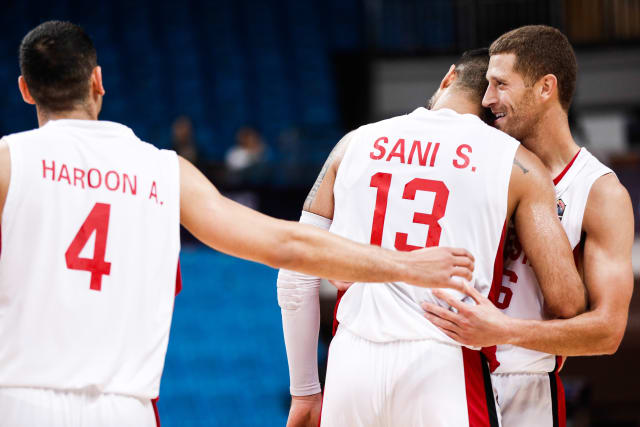
Sakakini said another memorable national team moment comes to in mind as his personal favorite but admits that beating the Philippines was huge.
"All the teams in China were in the same hotel, so I was asking the guys from the Jordan national team like what do they think about the Philippines. We already knew about the Philippines and it was like yeah, try your best."
"We went to the game and at the beginning first game, there was the tension that our team was playing against the Philippines. They had [Andray] Blatche, all those guys that we had already watched every Asia Cup or all the games. They had a lot of experience."
"We went there and we just played, played, played."
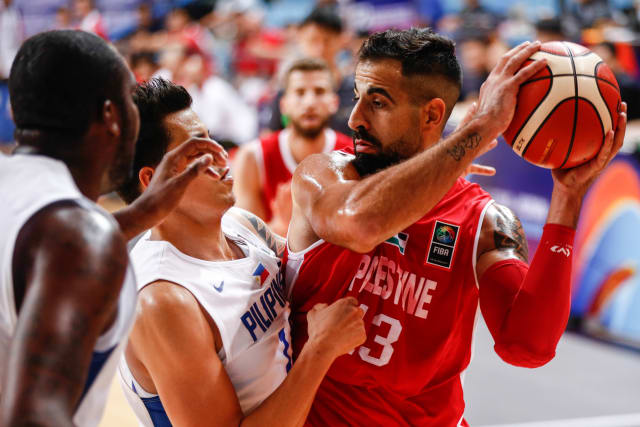
Sakakini explained that Jerry Steele, Palestine's coach at the time, was a calm coach and had told the team to keep doing what they were doing and that everything would be alright.
And everything turned out to be alright as coach Steele said.
"We went in, Jamal [Abushamala] hit those three threes in a row, that was amazing. I had the and-one at the end of the game and then I blocked Blatche."
"That was one of the best feelings because you go there and everybody is saying that you're going to lose 40 points and then you end up winning that game."
"We shocked them because when they came to the game, they don't know us, they don't know what we're doing. They probably know me and one or other two guys in the team, but we shocked them and then we took the chance. They're a big team, I'm proud we beat them. I know they are probably still mad until now, but that was that was a big win for us."
"And I think it woke them. When they lost, they woke up and they played very well after that game the whole tournament, so we gave them some good things."
However, even after the big win, Sani revealed that the team didn't get much time to celebrate.
"We practiced!" Sakakini said of what they did after the win. "We practiced at night. We went after the game. We celebrated in the locker room and after we went to the hotel, I remember we were talking with the coach. He was like we have to go to practice and everyone was like 'What?'"
"That was the second best feeling with the national team [for me]," Sakakini added about the win over the Philippines. "The first one was when we qualified for the Asia Cup."
"Every national team, when you play, the people in the country give you more attention. It's different when you play with the team."
"This was the first time I felt that the people supported the national team. This was the first time I felt there was a lot of people watching basketball, watching us. So when we qualified by beating Iraq in that game, [I got] crazy messages and phone calls. When we went back to Palestine, all the people were like congratulations, that was big."
"This gave us more motivation going into the Asia Cup, put more responsibility knowing there's a lot of people watching. People woke up at five in the morning just to watch the games against the Philippines. When we beat them, even more crazy messages! A lot of people got more involved watching the national team now."
Nearly five years after that Asia Cup debut, the love for the team from the fans still remains strong as evident from the first window of the Asia Cup Qualifiers, especially in the home game against Sri Lanka.
"Coming back after Kazakhstan game and what happened in the Kazakhstan game, the fans wanted to go watch our games again. The only problem was that game was a little bit far from where we lived."
"We only have one court that is [regulated for FIBA] for us to play in a city called Jenin. All the people, they drove there. They were having fun! They wanted to go there. This was the first time that they watched me play with this guy, watched this guy play with these guys. Because they usually go there and those guys play against each other. We never played with each other."
"Imagine all the people in Palestine, they never cheered for the national team! This is shameful, you know? They never cheered for the national team and this is tough. This was the first time all the fans, they cheered 'Palestine, Palestine!'. That was a very emotional game. That game was bigger than basketball."
"We played that game just for the fans and just to let them have fun."
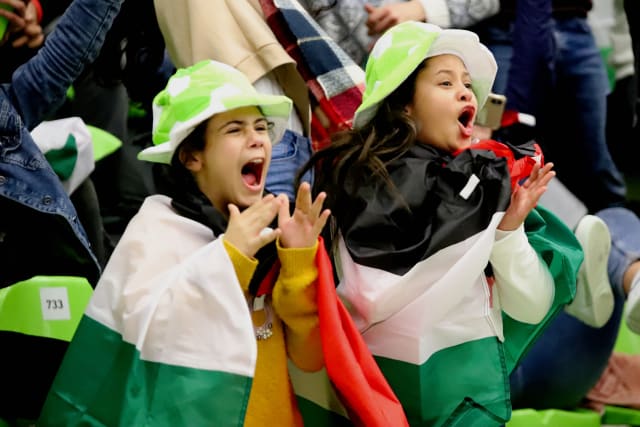
The moment afterwards their win against Sri Lanka was just as significant as the moments leading up to it.
"The people didn't want to leave the gym!" said Sakakini. "I mean pictures, pictures, and then fans asking for our jerseys. I was like the national team just give us two, we have to play with those in the next window. Then the people wanted to have the sleeves and the shoes and all that stuff. I mean I like the fans, man. Here in Palestine, they are the best."
Having played all over Asia (and all over the world, as a matter of fact), Sakakini has played against many great players like the stars in Venezuela. However, he notes that the competition he enjoys facing the most has been in China where he has played professionally for most of the past decade.
"[I liked] playing against the Guangdong [Southern Tigers] because they usually have most of the national team. They have Yi [Jianlian], they have all that. They have Zhu [Fangyu]. I actually played against Wang Zhizhi at the beginning in my career in China but I didn't get a chance to play again Yao Ming."
He also mentioned about enjoying competing against the Xinjiang Flying Tigers because they had the other China national team players like Zhou Qi and Abudushalamu Abudurexiti.
"China is the top national team in Asia, you know? Stying there, playing against those guys is always fun."
In particular, Sakakini loves going up against Yi Jianlian.
"He's tough. He's very tall and his arms are very long. He's very athletic."
"When you see those players on TV, it's way different when you play against them."
That's why Yi was among one of the players on Sakakini's wishlist for his All-Time Asia Cup Starting Five. Sakakini admitted to having a hard time compiling a list, ending up with two teams.
"I have a lot of friends so I want to pick all of them!" he said. "I want to pick my team to play with me and the other team [to play against]."
"My team is going to be, my guy, [Hamed] Haddadi at the five. I'm taking Yi on the four. Since the lock down, I've been working on my dribbling and I can be a three man now, so I put myself on that. I'll put Jamal Abushamala on the two. And I will put Fadi [El Khatib] on the one."
"We're going to play against Zaid Abbas on the four."
"At the point guard, Jimmy Alapag. I've been watching him a lot on TV. We've become friends on social media. I've never met him and never played against him, but I like the way he plays."
"I put at the three, 'Micho' Michael Madanly. At the five, I'll put Yao because I wish I could play against Yao one day."
"For the two, nobody has picked him up so I'm going to put Rony Fahed. I played with Rony, I like his spirit, I like the way he plays when we played together in Lebanon."
For his own team, Sani wants Sam Daghlas at the helm while noting that he'd like Ahmad Farhan coaching on the opposing bench.
Sakakini is looking forward to play for the Palestine national team once again in the upcoming windows of the Asia Cup Qualifiers, especially against Jordan since his wife is also a national team player for the Jordan national team.
"It's tough for her because now we have a game against Jordan so she doesn't know who she's going to cheer for: her country or her husband. It's going to be tough I think, we joke sometimes about that."
Palestine's star is also looking forward to a brighter future for the national team. He encourages any aspiring player to contact him for any advice or suggestions that he might be able to hand out. Sakakini knows that there are many talented players out there that can play for Palestine and he hopes that they can all come together to make Palestine one of the top 4-5 teams in Asia.
Throughout the entire talk, Sakakini also discussed the backstory of his number 13 jersey, his brother Salim, playing with Omar Krayem, and other fun encounters in China.
Make sure to catch the conversation on the @FIBAAsiaCup IG TV account!
FIBA