10 unsung heroes at FIBA AfroBasket 2017
SHEFFIELD (Julio Chitunda's African Message) - The FIBA AfroBasket 20017 was fruitful and it disclosed some of the continent's finest basketball talents.
SHEFFIELD (Julio Chitunda's African Message) - The FIBA AfroBasket 20017 was fruitful and it disclosed some of the continent's finest basketball talents.
Although Nigerian Ike Diogu was undisputedly the tournament Most Valuable Player, a number of players have made the event worth watching. 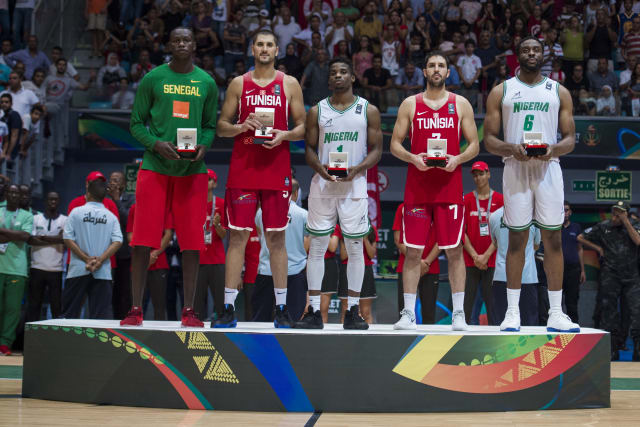
All-Star team from left to right: Gorgui Dieng, Mohamed Hadidane, Ikenna Iroegbu, Mourad El Mabrouk and Ike Diogu
With a tournament-high 22 points per game, Diogu headlined the All-Star team along with Gorgui Dieng (Senegal), Tunisian duo of Mourad El Mabrouk and Mohamed Hadidane and his fellow Nigerian Ikenna Iroegbu.
But, how about players who carried their teams to levels that few expected to?
There is only way to describe them: Unsung heroes.
And this is why.
1. Benoit Mbala (Cameroon)
In the absence of Jeremy Nzeulie, Kenneth Kadji and Luc Mbah a Moute - just to mention a few -, few expected Cameroon to make a splash in Tunis.
While Cameroon fell to eventual runners-up Nigeria in the last eight, Mbala returned home with tournament-high 32 points under his belt.
2. Ikechukwu Nwamu (Nigeria)
Some of the most entertaining plays of the tournament came from Nwamu's hands. He dunked, hit three-pointers countless times, and even played tough defense.
Wow 😱 Ike "Curry" Nwamu 👌👌 @ike_nwamu @nbbfonline#AfroBasket2017 pic.twitter.com/zf4rRtVult
— FIBA (@FIBA) September 15, 2017
It came as no surprise that he received the best three-pointer award.
3. Robinson Opong (Uganda)
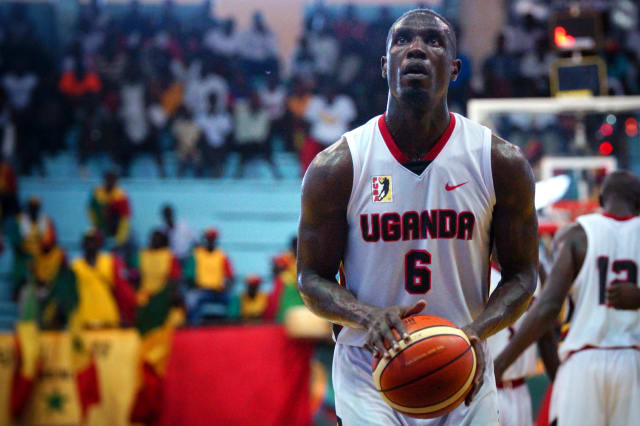 Unless you've followed Canadian or NCAA basketball in recent years, you might have never heard of Opong, a huge three-pointer specialist who led the East African in scoring with 15 points per game.
4. Leandro Conceicao (Angola)
 While eleven-time Africa champions Angola recorded their worst FIBA AfroBasket campaign in more than three decades, and are now trying to figure out what the future holds to their basketball reputation, one name emerges as a star in the making. Along with teammate Leonel Paulo, point guard Conceicao - the son of FIBA Hall of Famer Jean Jacque Conceiao - was a delight to watch.
5. Herve Kabasele (DR Congo)
1st look at 20-year-old highlight machine Hervé Kabasele. DR Congo in Last 8 now, beat Ivory Coast & Nigeria. pic.twitter.com/RQPGqvpLBS
— Simon Jatsch (@sJacas) September 11, 2017
As the youngest player in the tournament, 20-year-old power forward-center Kabasele played like a veteran leading his country with a team-high 14.8 points.
6. Mohamed Choua (Morocco)
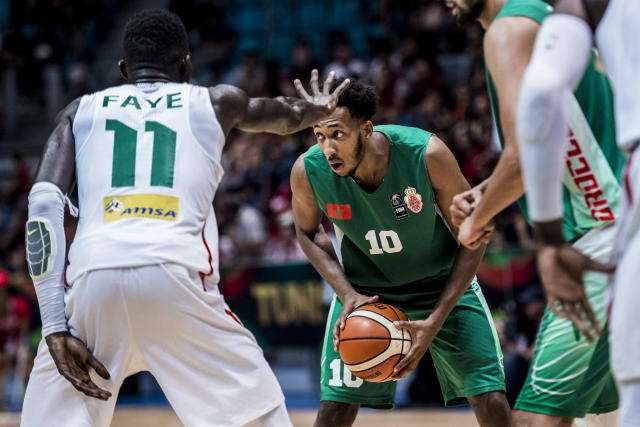
With the likes of Mustafa Khalfi, Zakaria El Masbahi and Soufiane Kourodu contemplating retirement from the national team, Choua - along with Ali Lahrichi - reminded everyone that the future of Moroccan basketball basketball is in good hands.
7. Lukusa Myck Kabongo (DR Congo)
.@myckkabongo 🎙🇨🇩 #AfroBasket2017
— FIBA (@FIBA) September 11, 2017
📖https://t.co/iir1u5xnsu pic.twitter.com/2Yc7Q5L6Ni
Kabasele may have led the DR Congo in scoring, but Myck Kabongo's impact throughout the tournament was fundamental to put the Congolese basketball back on international map again.
In the process, Congo reached the Quarter-Finals after a decade-long absence.
8. Moustafa Elmekawi (Egypt)

A 6ft8in (2.04m) center, and an impressive agility, 22-year-old Elmekawi lived up to his fighter credentials. He made his present felt on a number of occasions.
9. Clevin Hannah (Senegal)
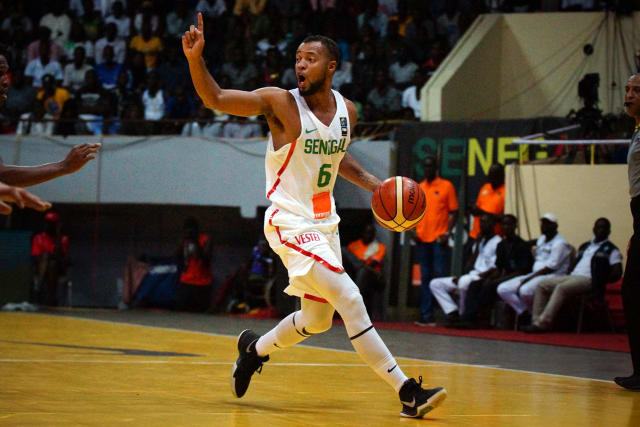
For years, Senegal have struggled at the guard position. And, although Hannah played as back up to Thierno Niang, his skill set has increased the team's scoring options.
10. Ziyed Chennoufi (Tunisia)
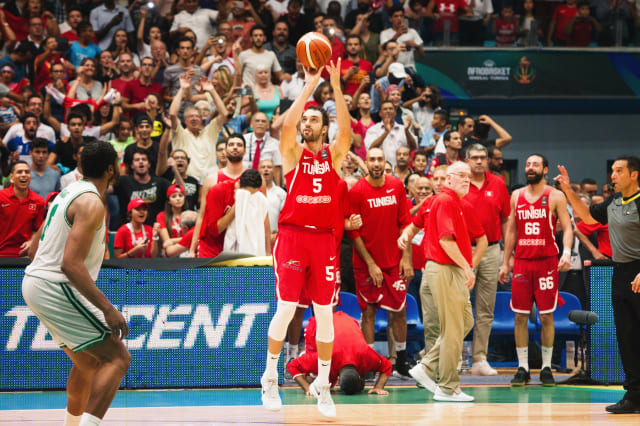 Chennoufi stepped up when it mattered most. And hitting four of his six three-pointers attempts en route to a team-high 19 points off the bench in the championship game has probably been Chennoufi's best outing with the Tunisian outfit.
In two months time, most of these players will be back action for the FIBA Basketball World Cup qualifiers.
Julio Chitunda
FIBA
FIBA's columnists write on a wide range of topics relating to basketball that are of interest to them. The opinions they express are their own and in no way reflect those of FIBA.
FIBA takes no responsibility and gives no guarantees, warranties or representations, implied or otherwise, for the content or accuracy of the content and opinion expressed in the above article.