Ecuador, a new game philosophy for the national teams
The Ecuadorian Basketball Federation (FEB) undergoes a transformation that began in 2013 and has lasted until this year, where it has specifically focused on the formative development of children to try to
GUAYAQUIL (Ecuador) – The Ecuadorian Basketball Federation (FEB) undergoes a transformation that began in 2013 and has lasted until this year, where it has specifically focused on the formative development of children to try to improve their first-division league and extend it to six or seven months. The goal is to increase the number of talents available for Ecuador’s national teams.
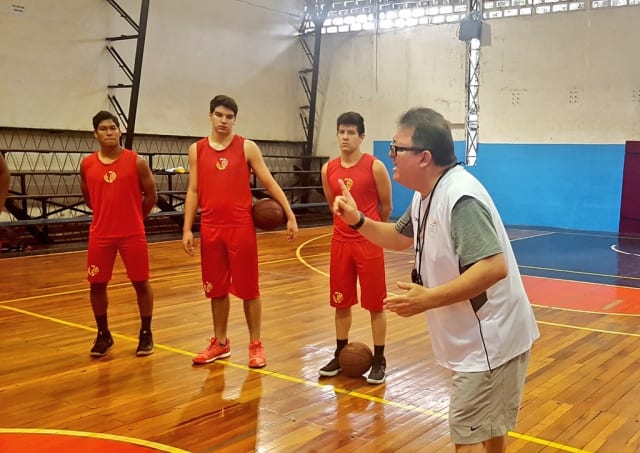
Starting three years ago, John Escalante and his technical staff oversee the different youth national teams in Ecuador and have achieved participating in a World Cup Qualifying Tournament, the first time that the male teams can reach such an important tournament for their country.
Now it's the time for the 2002-born category, who will face a new tournament with the support of FEB, who has greatly invested to build and develop this category. And like this, they held 9 training micro-cycles, some of which lasted 3 days and others lasted 5. They have helped to prepare players to attend important events held in Ecuador, which has helped to determine the U17 national team athletes – which were 40 in the beginning.
The U17 national team has an experienced coach in these categories named John Escalante, as well as his assistant, Raúl Vilatuña.
This is a relevant background for Ecuadorian basketball and invites to attempt again to seek a medal in the South American Championship (November 25-30 in Santiago de Chile), after conquering two bronze medals. The first, with the national U17 team in the South American Championship 2017 in Lima, which allowed them to qualify to the Qualifiers in Canada; and the U14, under the lead of Vilatuña and Escalante, that won the South American Championship in Goiania, Brazil, this year.
With these medals, Ecuador once again was positioned among the best South American national teams. In social media, the Brazilian feat was portrayed as an achievement as “brilliant as bronze and as valuable as gold.”
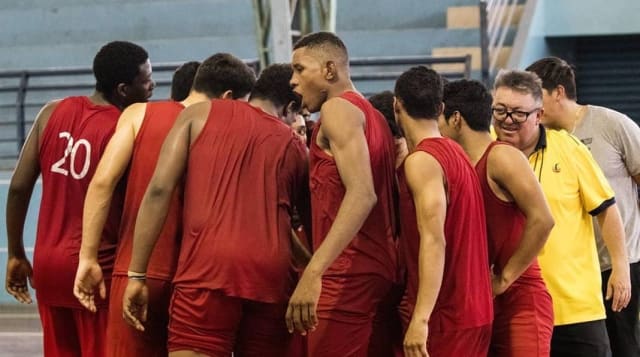
For the final phase of the training sessions before the new South American Championship, 12 players will meet in the city of Guayaquil on November 20 to travel to Santiago de Chile and face the new challenge.
Before the Tournament they worked on specific offense and defense objectives, such as achieving a 40% field goal average, throwing at least 55 shots to the basket, 70% from the free-throw line, 20 assists, no more than 10 turnovers, having 2 players with more than 16 points, and scoring at least 65 points per game. This was also accompanied by keeping the other team in a 47% field goal average, letting them shoot 45 times tops, allowing no more than 14 free shots, losing 5 defensive rebounds, allowing no more than 10 assists, and forcing at least 20 turnovers.
Continúa la preparación de la preselección masculina U17 en Guayaquil dirigida por los Profesores John Escalante y Raul Vilatuña pic.twitter.com/TYxrosQeUt
— Baloncesto Ecuador (@FebEcuador) October 24, 2019
“The team has big and strong athletes and we're well prepared. Even though the distances of the cities of these players are big, they have made sacrifices to train and we're anxious to represent our country. This is an interesting generation, with one of the players having played in the Qualifiers in Canada and three of them have participated in South American tournaments,” said national team coach John Escalante, to FIBA.basketball.
This national team will feature Kevin Vera, born in the Chordeleg canton of the Azuay province, and who has integrated the U17 national team at the age of 14. He has a privileged height among the basketball players of this country. Today, at the age of 16, he measures 6’9.5” and his maximum growth projection is 7’09”. This is an ideal height for a young man who strives to triumph and that today plays in the National Argentine Basketball League while continuing his school studies and dreaming of going soon to Europe.
“With me leaving overseas I'm achieving my first dream and I hope that every dream in my mind comes true and playing in the national team and representing Ecuador is one of them,” he stated.
For some time, there has been a radical change in the Ecuadorian Federation’s direction. “We've had a lot of support from the FEB and we have held a lot of tournaments. Players have 40 games a year and that's really good for national team coaches,” Escalante explained.
In Ecuador, there is also a Coaching Academy that helps national team coaches to develop the tools they need to apply with their teams. “We try to find a way for everyone to know the same concepts and have the same game identity,” the coach commented.
He also talked about Ecuador's new basketball: “Our team is small compared with others in South America, but we're getting to better spots in upcoming tournaments. Coaching improvements have also brought about a game improvement in the national teams. The national teams we’ll face will eventually stop enjoying playing against us and they’ll change their idea of what Ecuador is. We have a new game philosophy for players to feel confident.”
With the arrival of José Arévalo to the presidency and his group of leaders, the FEB has taken on a process of sending male categories to international tournaments. Today in Ecuador there’s talk about medals, qualifications, and victories thanks to the foundations laid in Mini Basketball with the parents, and with the constant backing by the Federation that put all its hopes on a long-term and solid work in all categories.
FIBA